

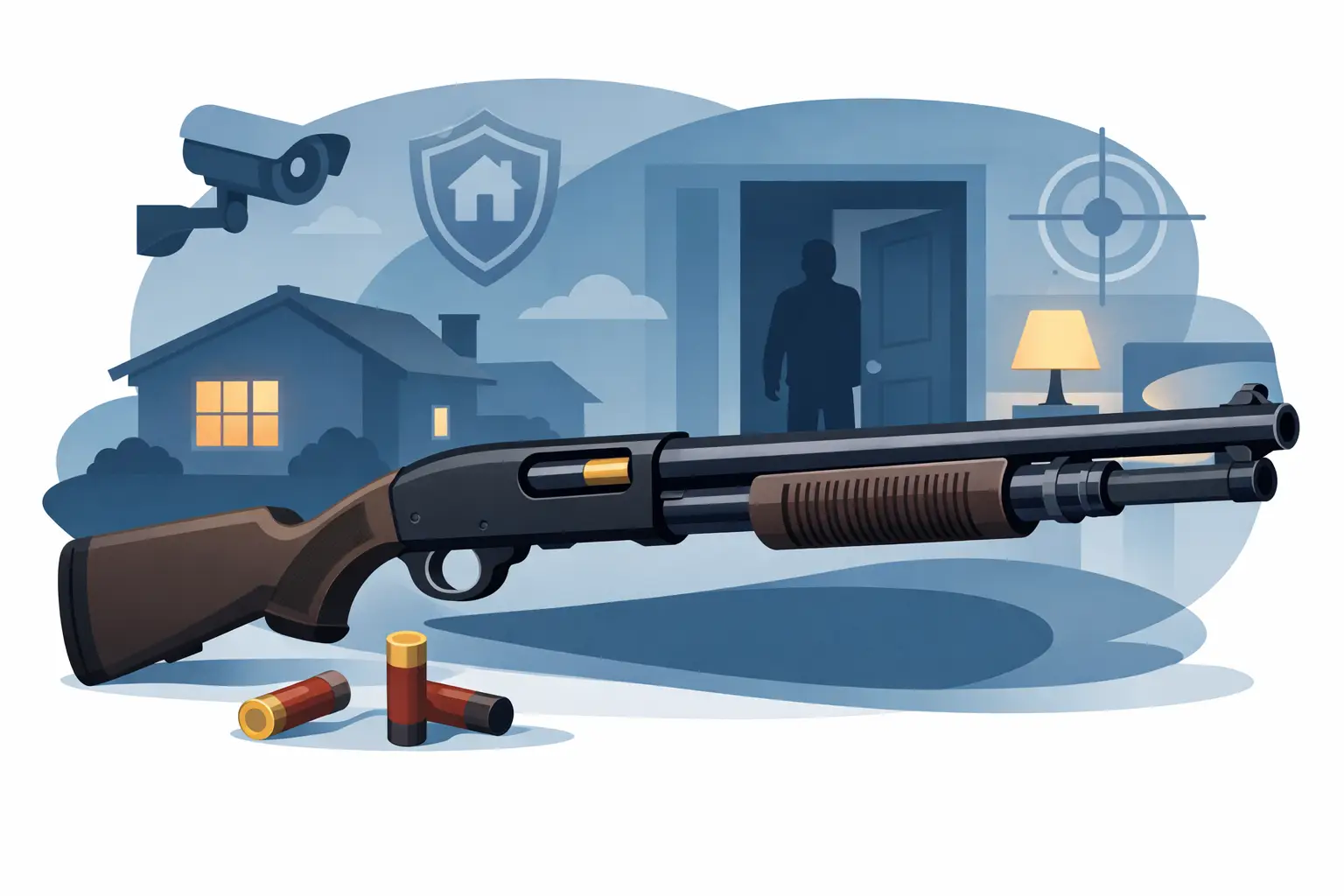
A pump action shotgun for home defense still earns its place the same way it always has – straightforward operation, proven reliability, and serious close-range capability without forcing you into a complicated setup. For buyers who want a defensive firearm that is easy to understand, widely supported, and available in proven models from trusted brands, the pump remains one of the smartest categories to shop.
That does not mean every shotgun on the shelf is equally suited for protecting a home. Barrel length, gauge, furniture, sighting setup, capacity, and overall fit all matter. A shotgun that looks good in a product photo can still be awkward in a hallway, too heavy for smaller shooters, or configured more for hunting than defense. If you are buying with a real defensive role in mind, the details separate a solid choice from a bad one fast.
Why a pump action shotgun for home defense still sells
The pump shotgun stays popular because it delivers a strong mix of price, durability, and practical effectiveness. A quality model can handle hard use, digest a broad range of shells, and keep maintenance simple. That matters to first-time buyers, but it matters just as much to experienced gun owners who want a dependable platform without extra electronics or a steep learning curve.
There is also a buying advantage here. The market gives you real choice. You can shop budget-friendly defensive models, upgraded tactical variants, and proven workhorse designs with decades of parts support behind them. For a retailer built around selection and value, this category makes sense because customers can compare configurations quickly and buy exactly what fits their space, experience level, and budget.
Still, the pump shotgun is not magic. Capacity is limited compared with many rifles. Recoil can be harsh, especially in lighter guns. The action must be run correctly every time. If a buyer wants the benefits, he should also understand the trade-offs.
What matters most when choosing a pump action shotgun for home defense
The first big decision is gauge. For most buyers, 12 gauge is the default because ammunition is common, defensive loads are widely available, and platform support is unmatched. It gives you the broadest selection across brands, barrel lengths, stocks, shell types, and accessories.
But 12 gauge is not automatically the best fit for every household. A lighter-framed shooter, an older buyer with shoulder issues, or someone who simply does not train often may be better served by a 20 gauge defensive setup. The reduction in recoil can improve control, speed, and confidence. A defensive shotgun you can run well beats a harder-kicking option that stays in the closet because nobody enjoys practicing with it.
Barrel length is next. Defensive pump shotguns usually make the most sense with shorter barrels, often in the 18 to 20 inch range. That keeps the gun more manageable indoors and easier to store in a ready but secure condition. Longer barrels can work, but they shift the gun away from a dedicated home-defense role and more toward field or sporting use.
Capacity matters, but context matters more. A standard tube capacity is often enough for a home-defense shotgun, yet many buyers still prefer models that offer an extra round or two. More capacity is generally better if it does not create major balance issues. At the same time, huge add-ons and oversized accessories can turn a simple defensive gun into a front-heavy mess.
Stock style is another area where buyers get distracted by looks. Traditional stocks remain popular because they are familiar, durable, and often give better control for many shooters. Pistol-grip variants appeal to tactical buyers, but not every pistol-grip setup improves handling. Some make the shotgun slower to mount and harder to run under stress. Fit is more important than style.
The best pump shotgun setups are usually simple
A lot of buyers start with the right idea and then overbuild the gun. For home defense, a clean, dependable setup usually wins. You want a proven pump action, a practical barrel length, a stock that fits the shooter, and controls that are easy to reach. After that, useful upgrades should stay focused on real function.
A weapon light is one of the few accessories that consistently earns its place. Identifying what is in front of you matters. A shotgun meant for defense in low light should be paired with a dependable light solution, whether that means a dedicated forend option or a well-mounted light from a reputable brand.
Sights depend on the buyer. A simple bead works for many defensive shotguns and keeps the package clean and fast. Ghost ring sights can help some shooters with precision and consistency, especially if the shotgun may serve double duty beyond across-the-room distances. There is no universal winner here. The better choice is the one that lets you aim quickly without overcomplicating the gun.
Side saddles and shell carriers can be useful, but this is where a lot of setups go wrong. A few extra rounds on the gun can make sense. Too much added weight on the receiver or stock can slow handling and create reliability issues if cheap accessories are used. Buy quality or skip it.
Proven models and what separates them
When buyers shop this category, a few families of shotguns keep rising to the top because they have earned trust over time. The Mossberg 500 and 590 series remain popular for good reason. They offer broad aftermarket support, practical defensive configurations, and controls many shooters like, especially the tang safety on standard-stock models.
The Remington 870 is another classic name in the category. A properly built 870 has long been one of the benchmark pump shotguns in America. Buyers looking at current production should still pay attention to overall finish, fit, and brand-specific quality reputation at the time they buy, but the platform itself remains one of the most recognized defensive shotgun choices on the market.
The Maverick 88 attracts value-driven buyers who want a no-nonsense pump without spending premium money. It is often one of the easiest entry points into a defensive shotgun setup, especially for buyers who want a proven design and do not need a long feature list.
Higher-end tactical pump guns exist as well, and some are excellent, but the jump in price does not always produce a better home-defense result for the average customer. In many cases, a well-chosen mainstream pump with smart accessories is the better buy than an expensive specialty shotgun loaded with features that will never be used.
What buyers often get wrong
One common mistake is buying a field shotgun and assuming it is close enough. Hunting models with long barrels, magazine plugs, and bead-only setups built for birds are not automatically ideal for inside-the-home use. They can work, but they are usually not the most efficient option if defense is the actual mission.
Another mistake is ignoring recoil management. Buyers love the idea of maximum power until they shoot heavy loads through a lightweight shotgun. Recoil changes how fast follow-up shots happen, how well the action gets cycled, and whether other household members can realistically use the gun. That is why load selection matters just as much as the firearm itself.
There is also the issue of neglecting training. A pump action only stays reliable in real use if the shooter runs it decisively. Short-stroking is a real problem when people do not practice. If you want the confidence of a pump shotgun, put in enough range time to build consistent manipulation.
Ammo choice is part of the buying decision
The shotgun is only half the equation. Defensive load selection shapes recoil, patterning, and overall controllability. Buyers should test what their chosen shotgun actually does with their selected load rather than relying on assumptions. Different guns can pattern differently even with similar shells.
Lighter-recoiling defensive loads are worth a serious look for many households. They can make the gun easier to control without giving up the practical performance most people need. The best choice depends on the shotgun, the shooter, and the home environment. There is no substitute for testing.
Buying with confidence instead of hype
The smartest home-defense shotgun purchase usually looks less flashy than people expect. It is a reliable pump from a trusted maker, configured for close-range handling, fitted to the shooter, and kept simple enough to run under pressure. That formula keeps winning because it works.
For buyers comparing inventory online, the biggest advantage is being able to filter out the noise fast. Look at gauge, barrel length, capacity, stock configuration, sight system, and brand reputation before you worry about cosmetic extras. A serious retailer such as Gun Shop Range earns trust by putting real selection in front of buyers, but the right choice still comes down to buying for the job instead of buying for the photo.
If you want a dependable defensive long gun without paying for features you do not need, the pump shotgun remains one of the strongest values in the market. Choose one you can handle well, set it up with purpose, and make time to train with it until operation feels automatic.