

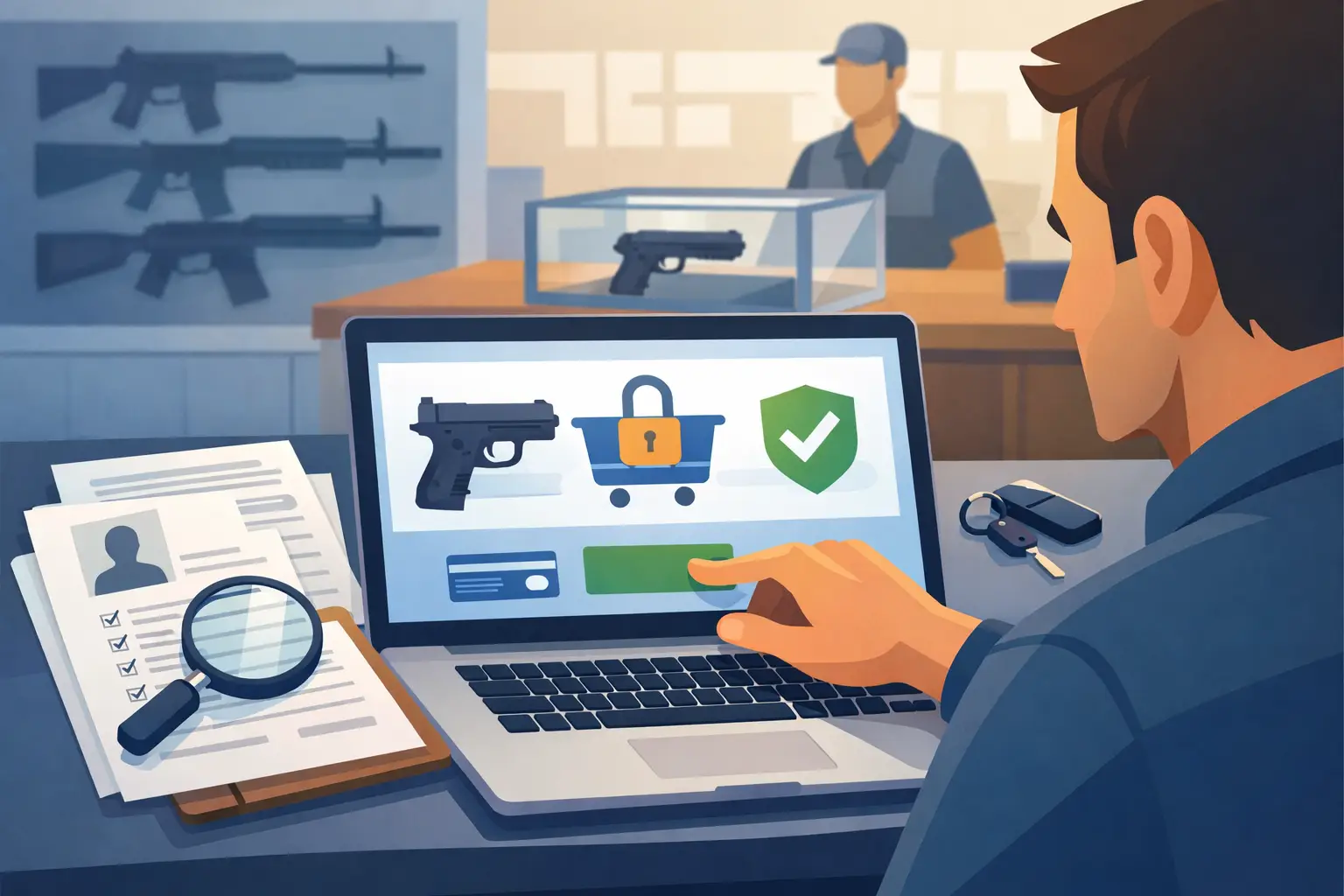
Buying a firearm online is straightforward when you understand the rules. If you are wondering how to buy a gun online legally, the short version is this: you can shop online, pay online, and ship the firearm to a licensed dealer, but you cannot have the gun shipped directly to your door unless it falls into a narrow legal exception. For most buyers, the process runs through a Federal Firearms License holder, better known as an FFL.
That single point trips up a lot of first-time buyers. They see a handgun, rifle, or shotgun in stock at a strong price, assume checkout works like any other ecommerce purchase, and then hit confusion at shipping. The legal part is not difficult, but it is specific. Get the steps right, and the process is fast, clean, and fully compliant.
How to buy a gun online legally in the US
Federal law sets the baseline, and state law can add more restrictions. That means your purchase is not just about what is legal nationally. It also depends on where you live, what type of firearm you are buying, and whether your state requires extra permits, waiting periods, registration steps, or magazine limits.
For most buyers, the legal process looks like this: choose the firearm, select a local FFL dealer for transfer, complete the order, have the seller ship the gun to that dealer, then complete the background check and transfer paperwork in person before taking possession. You are buying online, but the actual handoff happens at the licensed dealer.
That matters because the internet seller and the local receiving dealer are both part of the compliance chain. A serious online retailer will require FFL information before shipping and will not bypass the transfer process. If a seller acts casual about that, walk away.
Step 1: Make sure you can legally own the firearm
Before you compare models or start chasing deals, confirm that you are legally eligible to buy and possess the firearm in your state. Federal law prohibits certain people from buying firearms, and some states go further. Age rules also vary by firearm type and local law.
This is where buyers need to be honest with themselves. A denied background check does not become less serious because the order started online. If your state requires a firearm owner ID card, handgun permit, purchase certificate, or another approval before transfer, get that handled first.
Step 2: Check whether the firearm is legal in your state
Not every gun listed online can be transferred into every state. Capacity restrictions, feature bans, roster rules, assault weapon laws, and handgun-specific regulations can all affect what you can actually receive.
A rifle that is perfectly legal in one state may be restricted in another because of stock type, threaded barrel, flash hider, or magazine size. The same goes for certain pistols, short-barreled platforms, and some shotguns. The product page may show the firearm in stock, but legality still depends on your location.
This is one of the biggest it-depends moments in the process. The online retailer may have broad inventory and sharp pricing, but state compliance still controls the transfer. Good buyers verify before checkout, not after the package ships.
Pick the firearm and the right FFL dealer
Once you know the model is legal in your state, the next move is choosing the dealer who will receive it. The FFL transfer dealer is the local business that accepts the shipment, runs the paperwork, performs the background check, and releases the firearm to you if approved.
Do not treat that step like an afterthought. Some FFLs charge modest transfer fees. Others charge enough to wipe out the savings you got online. Some move buyers through fast and communicate clearly. Others are slow, hard to reach, or unwilling to accept transfers from certain sellers.
Call ahead. Confirm they accept incoming transfers, ask about their fee, ask what identification or permits you need to bring, and make sure they are comfortable receiving the exact type of firearm you ordered. This is especially smart if you are buying something less common or buying in a heavily regulated state.
What the online seller needs from your FFL
Most online firearm retailers either already have a large network of FFL dealers on file or will ask your chosen dealer to send a copy of their license. Some let you select the dealer during checkout. Others confirm the FFL after the order is placed.
Either way, do not assume the seller can ship until that license information is squared away. Delays usually happen here, not because the process is broken, but because buyers pick a dealer without confirming transfer acceptance first.
The background check and transfer process
When the firearm arrives at your local FFL, you go there in person to complete the transfer. That usually means filling out ATF Form 4473, showing valid government-issued photo ID, and undergoing the National Instant Criminal Background Check System process, unless your state uses a separate system or requires additional steps.
This is the point where the sale becomes possession. Paying online does not put the gun legally in your hands. Passing the transfer process does.
For some buyers, the background check comes back quickly. For others, it can be delayed. A delay is not automatically a denial, and timing can vary. Some states also impose a waiting period even after approval, while others allow same-day pickup if everything clears.
Can the firearm ship directly to your home?
For standard modern firearms, no. If you are asking how to buy a gun online legally and have it sent straight to your house, that is generally not how it works. The firearm ships to an FFL, not directly to a residential address.
There are limited exceptions involving certain antique firearms or other category-specific situations, but those are not the rule for typical handguns, rifles, and shotguns sold through mainstream online stores. Most buyers should assume FFL transfer is mandatory.
Costs buyers forget to factor in
The listed price is only part of the total. Online firearm purchases often involve shipping charges, FFL transfer fees, and possibly state fees or taxes. If you are comparing online pricing against a local shop, be honest about the full cost.
That said, online buying still wins for a lot of customers because inventory is wider and hard-to-find models show up more often. If you want a specific brand, barrel length, finish, optic-ready configuration, or limited-run model, online selection can be the difference between settling and getting exactly what you want.
This is where established sellers earn trust. A strong online dealer does not just list products. It supports the transfer process with clear policy information, responsive order handling, and the kind of inventory depth serious buyers actually care about.
Common mistakes that can derail the order
Most legal problems are not dramatic. They are simple buyer mistakes. People order a configuration banned in their state. They choose an FFL that does not accept transfers. They use an ID with an old address. They forget that magazine limits apply even if the gun itself is legal.
Another common issue is assuming every firearm follows the same rules. Handguns can trigger different age and transfer rules than long guns. Some states treat semiautomatic rifles differently from bolt-actions or pump guns. NFA-regulated items are their own category entirely and involve a much more involved approval process.
If anything about the model, your state, or the transfer rules seems unclear, slow down and verify before you buy. The best online purchase is not just the lowest sticker price. It is the one that gets approved, delivered, and transferred without problems.
How to buy a gun online legally without wasting time
The fastest path is simple. Start with a compliant firearm. Choose a reputable online seller. Confirm your local FFL before checkout. Make sure your ID and any state-required permits are current. Then complete the transfer in person and follow your state pickup rules.
That is the legal lane, and it is the lane smart buyers stay in. No shortcuts, no guesswork, no bad surprises after the order is placed.
If you are buying online for the first time, confidence comes from understanding the process. Once you know the rules, the experience is not complicated at all. It is just controlled, and that is exactly how a firearm purchase should be.
A serious buyer does not chase loopholes. He gets the right gun, from the right seller, through the right FFL, and gets it done the right way the first time.