

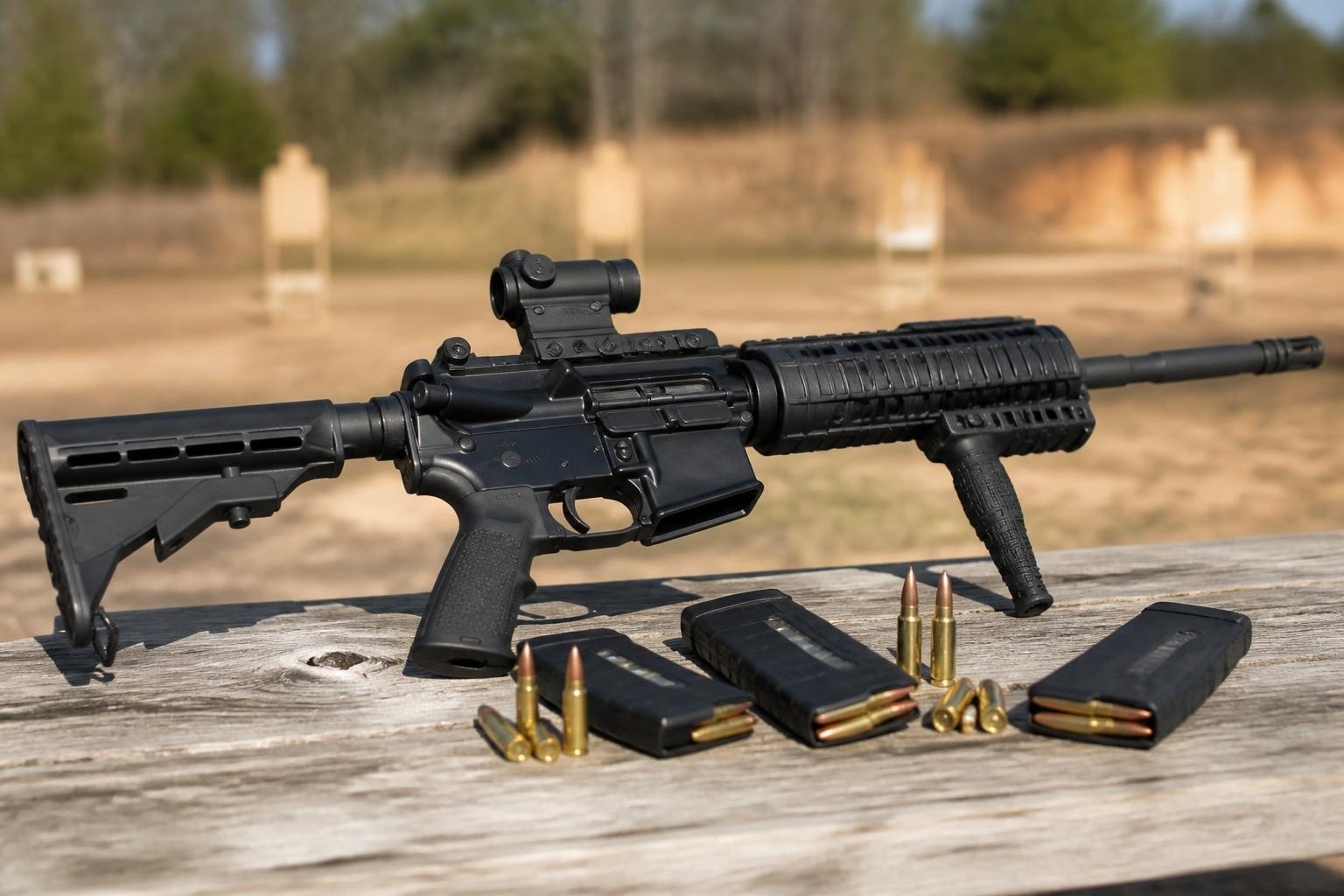
The Ruger AR-556 has established itself as one of the most reliable and affordable AR-15 platform rifles available today. For shooters looking to buy Ruger AR 556 models, understanding the various configurations, features, and specifications becomes essential to making an informed purchase decision. This rifle combines Ruger's century-old manufacturing expertise with modern AR-15 technology, creating a platform that appeals to first-time buyers and experienced shooters alike. Whether you're building your collection, seeking a dependable home defense option, or entering the world of competitive shooting, the AR-556 deserves serious consideration.
Understanding the Ruger AR-556 Platform
The AR-556 represents Ruger's entry into the modern sporting rifle market, first introduced in 2014 as a direct response to consumer demand for quality AR-15 rifles at accessible price points. Ruger designed this rifle with a focus on reliability, durability, and value, utilizing cold hammer-forged chrome-moly steel barrels that undergo extensive testing. The American Rifleman review highlights how Ruger achieved exceptional accuracy standards while maintaining competitive pricing.
Core Specifications and Features
When you buy Ruger AR 556 rifles, you're investing in a platform built to mil-spec standards with several enhanced features:
- Barrel Length: 16.1 inches with 1:8 inch twist rate
- Overall Length: 32.25 to 35.5 inches (depending on stock position)
- Weight: Approximately 6.5 pounds unloaded
- Caliber: 5.56 NATO (also accepts .223 Remington)
- Gas System: Direct impingement with milled F-height gas block
- Capacity: 30-round Magpul PMAG included
The rifle ships with a proprietary flash suppressor, forged aluminum upper and lower receivers, and Ruger's Rapid Deploy folding rear sight paired with an elevation-adjustable front sight. These features create a ready-to-shoot platform straight from the box.

AR-556 Model Variants and Configurations
Ruger expanded the AR-556 lineup significantly since its initial release, offering specialized variants that cater to different shooting applications and preferences. Understanding these variations helps buyers select the configuration that best matches their intended use.
Standard AR-556 Models
The base AR-556 provides everything needed for target shooting, home defense, and general recreational use. This configuration features a six-position adjustable stock, single-stage trigger, and standard carbine-length handguard. The simplicity of this model makes it ideal for shooters who plan to customize their rifle over time or prefer a straightforward, dependable platform.
AR-556 MPR (Multi-Purpose Rifle)
The MPR variant elevates the platform with premium features that typically cost hundreds more when purchased separately. According to Rifle Shooter’s comprehensive MPR review, this model includes an 18-inch barrel, rifle-length gas system, and upgraded trigger assembly. Additional enhancements include:
| Feature | Standard AR-556 | AR-556 MPR |
|---|---|---|
| Barrel Length | 16.1 inches | 18 inches |
| Handguard | Standard carbine | 15-inch free-float |
| Trigger | Single-stage | Elite 452 two-stage |
| Muzzle Device | Flash suppressor | Ruger Hybrid brake |
| Stock | Standard M4 | Magpul MOE |
Pistol and SBR Variants
For those interested in compact configurations, Ruger offers pistol variants with stabilizing braces and shorter barrels. These models provide enhanced maneuverability while maintaining the AR-556's reliability and accuracy characteristics.
Performance Analysis and Real-World Testing
Shooters who buy Ruger AR 556 rifles consistently report excellent reliability across various ammunition types and shooting conditions. The cold hammer-forged barrel demonstrates exceptional longevity, with many owners documenting accuracy that remains consistent well beyond 10,000 rounds.
Accuracy and Grouping
At 100 yards, the standard AR-556 typically achieves 2-3 MOA (minute of angle) groups with quality ammunition, while the MPR variant often delivers sub-MOA performance thanks to its longer barrel and upgraded trigger. The Shooting Times evaluation documented impressive consistency across multiple ammunition weights, from 55-grain to 77-grain projectiles.
Factors contributing to this accuracy include:
- Barrel Quality: Chrome-moly steel with 5R rifling in certain variants
- Chamber Specifications: Properly dimensioned 5.56 NATO chamber
- Trigger Consistency: Crisp break with minimal overtravel
- Sight System: Durable iron sights with precise adjustments
Reliability Under Various Conditions
The AR-556 maintains function across temperature extremes, from freezing conditions to summer heat exceeding 100 degrees Fahrenheit. The direct impingement system, when properly maintained, provides thousands of rounds between cleanings without malfunction. Owners report successful cycling with both brass-cased and steel-cased ammunition, though Ruger recommends quality brass-cased rounds for optimal performance.

Pricing Considerations and Value Assessment
The decision to buy Ruger AR 556 models often comes down to exceptional value proposition in the current market. As of 2026, pricing typically ranges from $699 to $999 depending on the specific variant and included accessories. The introduction of budget-friendly AR platforms revolutionized the market, making quality rifles accessible to broader audiences.
Cost Breakdown by Model
Understanding the pricing structure helps buyers allocate their budget appropriately:
- AR-556 Standard: $699-$749
- AR-556 MPR: $899-$999
- AR-556 Pistol: $799-$849
- AR-556 with Optics: $799-$899
These prices represent typical retail values, though sales, promotions, and dealer pricing can significantly reduce costs. When comparing to competitors, the AR-556 consistently offers more features per dollar spent, particularly in the MPR configuration.
Long-Term Ownership Costs
Beyond the initial purchase price, consider ongoing expenses including ammunition, magazines, maintenance supplies, and potential upgrades. The AR-556's compatibility with standard AR-15 parts means affordable upgrade paths and readily available replacement components. Magazines typically cost $10-$15 each, while maintenance kits run $30-$50 for comprehensive cleaning supplies.
Essential Accessories and Upgrades
While the AR-556 arrives ready to shoot, certain accessories enhance functionality and tailor the rifle to specific applications. Whether you're looking for guns or accessories to complement your new AR-556, prioritizing practical upgrades over cosmetic changes delivers better long-term value.

Optics and Sighting Systems
The factory iron sights provide reliable backup sights, but adding a quality optic significantly improves target acquisition speed and precision. Popular choices include:
- Red Dot Sights: Fast acquisition for close to medium range ($100-$300)
- Low-Power Variables: 1-6x or 1-8x scopes for versatile applications ($200-$600)
- Fixed Magnification: 3x or 4x prisms for dedicated mid-range work ($150-$400)
- Holographic Sights: Premium option with unlimited eye relief ($400-$600)
Mount your optic on the flat-top Picatinny rail, ensuring proper eye relief and height for comfortable shooting position. Quality mounts from reputable manufacturers prevent zero shift and maintain accuracy across shooting sessions.
Furniture and Ergonomic Enhancements
Upgrading furniture components personalizes the rifle and improves handling characteristics:
- Pistol Grips: Ergonomic designs reduce fatigue during extended sessions
- Stocks: Adjustable options accommodate different shooter sizes and shooting positions
- Handguards: M-LOK or KeyMod systems provide accessory attachment points
- Charging Handles: Extended latches enable easier manipulation with optics mounted
These modifications range from $20 for basic grips to $200 for premium furniture sets. Focus on components that address specific comfort or functionality concerns rather than purely aesthetic changes.
Legal Considerations and Compliance
Before you buy Ruger AR 556 rifles, understanding federal, state, and local regulations ensures legal ownership and proper transfer procedures. The AR-556 qualifies as a semi-automatic rifle under federal law, requiring purchase through licensed dealers with mandatory background checks for all buyers.
Federal Requirements
All purchases require completion of ATF Form 4473 and successful NICS background check. Buyers must be at least 18 years old for rifles (21 for pistol variants through FFLs). The AR-556 does not require special licensing or registration at the federal level, though NFA items like suppressors or short-barreled rifles demand additional paperwork and tax stamps.
State-Specific Regulations
Certain states impose additional restrictions on AR-platform rifles:
| State Category | Restrictions | Compliance Methods |
|---|---|---|
| Ban States | Complete prohibitions or pre-ban only | Verify current laws before purchase |
| Feature Restriction | Limited pistol grips, stocks, or flash suppressors | Compliant configurations available |
| Magazine Capacity | 10-round or 15-round limits | Purchase appropriate magazines |
| Registration Required | Mandatory owner databases | Complete state registration forms |
Check current laws in your jurisdiction, as regulations evolve regularly. The Wikipedia overview of the AR-556 provides historical context about the platform's development and regulatory environment.

Maintenance and Long-Term Care
Proper maintenance extends the AR-556's service life and ensures reliable performance across thousands of rounds. Ruger designed this rifle for straightforward field stripping and cleaning, requiring minimal tools and technical knowledge.
Routine Cleaning Procedures
After each shooting session involving 200 rounds or more, perform basic cleaning:
- Field Strip: Remove upper from lower, extract bolt carrier group and charging handle
- Barrel Cleaning: Run solvent-soaked patches through bore, follow with dry patches
- BCG Maintenance: Clean carbon from bolt face, gas rings, and carrier exterior
- Lubrication: Apply light oil to wear points and friction surfaces
- Function Check: Verify proper cycling and trigger reset before reassembly
This 15-20 minute process prevents carbon buildup and maintains smooth operation. Deep cleaning every 1,000 rounds addresses areas not covered in routine maintenance.
Parts Replacement Schedule
Monitor these components for wear and replace as needed:
- Extractor Spring: Every 5,000 rounds or when ejection becomes inconsistent
- Gas Rings: When three stacked rings allow bolt to drop freely in carrier
- Buffer Spring: Every 10,000 rounds or when cycling becomes sluggish
- Firing Pin: Inspect for wear annually, replace when tip shows mushrooming
Replacement parts cost $5-$30 per component, making preventive maintenance economical compared to addressing failures during shooting sessions.
Ammunition Selection and Optimization
The versatility to buy Ruger AR 556 models chambered in 5.56 NATO provides access to extensive ammunition options. Understanding ammunition characteristics helps optimize performance for specific applications while managing costs effectively.
Training and Practice Ammunition
For high-volume shooting and skill development, affordable options deliver reliable function without premium pricing:
- 55-Grain FMJ: Budget-friendly, widely available, adequate accuracy ($0.35-$0.50 per round)
- 62-Grain FMJ: Better wind resistance, mild penetration improvement ($0.40-$0.55 per round)
- Steel-Cased Options: Maximum economy for casual shooting ($0.30-$0.40 per round)
Purchase in bulk quantities (500-1,000 rounds) for best per-round pricing. Store ammunition in cool, dry locations to maximize shelf life.
Premium and Defensive Loads
For serious applications, invest in quality defensive or match-grade ammunition:
- 77-Grain OTM: Excellent long-range accuracy and consistency
- 62-Grain Bonded HP: Reliable expansion with controlled penetration
- 69-Grain Match: Competition-grade accuracy for precision work
- 75-Grain Barrier-Blind: Defeats intermediate barriers while maintaining effectiveness
These specialized loads cost $1.00-$2.50 per round but deliver measurably superior performance in demanding applications.
Comparison with Competing Platforms
When evaluating whether to buy Ruger AR 556 rifles versus competing options, consider total value including features, reliability, and manufacturer support. The AR-556 competes directly with offerings from Smith & Wesson, Palmetto State Armory, Diamondback, and other manufacturers targeting the entry to mid-level market segment.
Feature-for-Feature Analysis
The AR-556 distinguishes itself through several key advantages:
Manufacturing Quality: Ruger's cold hammer-forged barrels and in-house production control ensure consistent quality standards across all units. Competitors often outsource critical components, introducing variability.
Warranty and Support: Ruger backs the AR-556 with comprehensive warranty coverage and responsive customer service. Their established dealer network provides easier access to service and parts compared to newer manufacturers.
Resale Value: AR-556 rifles maintain strong secondary market values due to brand recognition and proven reliability. This consideration matters for buyers who may upgrade or change their collection over time.
Performance Benchmarks
Independent testing consistently places the AR-556 among top performers in its price class. A detailed video comparison from 2025 evaluated current budget AR-15 options, confirming the AR-556's competitive positioning regarding accuracy, reliability, and overall value.
Customization and Modularity
The AR-15 platform's greatest strength lies in its modularity, and the AR-556 fully embraces this characteristic. Buyers who purchase this rifle gain access to the largest aftermarket support ecosystem in the firearms industry, enabling endless customization possibilities.
Popular Modification Paths
Common upgrade trajectories include:
Precision Build: Enhanced trigger, free-float handguard, quality optic, bipod, and match-grade barrel
Home Defense Configuration: Weapon-mounted light, red dot sight, upgraded stock, vertical foregrip, and extended magazine release
Competition Setup: Compensator or muzzle brake, competition trigger, adjustable stock, lightweight handguard, and low-power variable optic
Minimalist Approach: Basic red dot, streamlined handguard, improved trigger, quality sling system
Each path transforms the base AR-556 into a specialized tool optimized for specific applications. Budget $300-$1,500 for comprehensive modifications depending on chosen components and installation costs.
DIY vs. Professional Installation
Simple upgrades like furniture swaps, trigger installation, and optic mounting require basic tools and minimal gunsmithing knowledge. Complex modifications including barrel replacement, gas system adjustments, or timing muzzle devices may benefit from professional installation to ensure proper function and safety.
The Ruger AR-556 represents an outstanding choice for shooters seeking proven reliability, excellent accuracy, and exceptional value in the modern sporting rifle category. Understanding the various models, proper maintenance requirements, and available accessories ensures you maximize your investment and enjoy years of dependable service. Whether you're purchasing your first AR-platform rifle or adding to an established collection, Gun Shop Range offers competitive pricing, expert guidance, and comprehensive support to help you find the perfect AR-556 configuration for your specific needs and applications.