

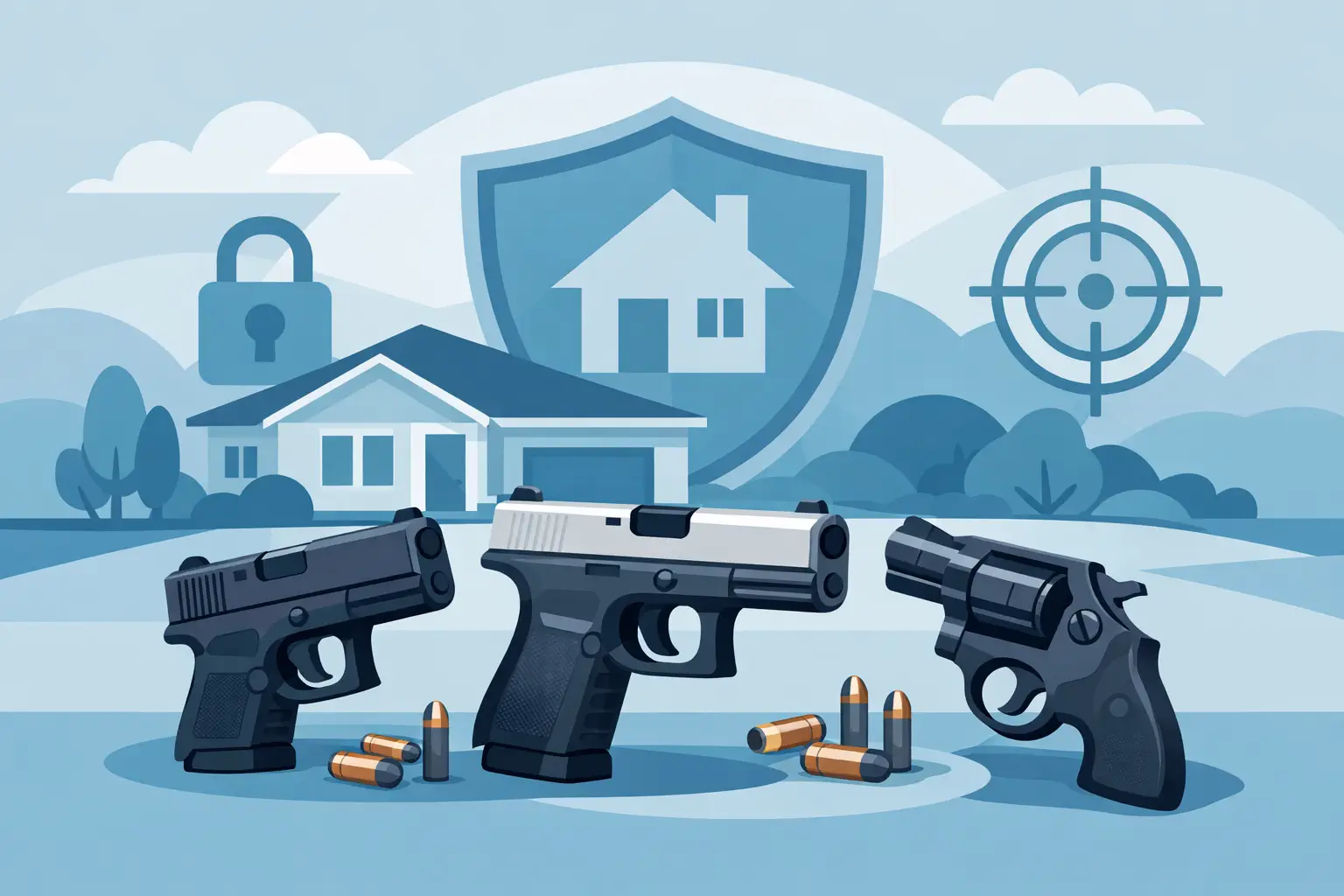
A bargain handgun that does not fit your hand, runs poorly, or sits inaccessible when it is legally needed is not a bargain. The best budget home defense handgun is a proven, manageable firearm you can shoot accurately, store responsibly, and afford to practice with regularly. That usually means skipping flashy extras and putting your money toward reliability, magazines, ammunition, a secure storage solution, and range time.
For most buyers, a full-size or compact 9mm semi-automatic pistol is the strongest starting point. It is not the only valid answer. A revolver, a .380 pistol, or a larger-caliber handgun may suit a particular shooter. But 9mm gives most households an excellent balance of controllability, capacity, ammunition availability, and affordable practice.
What Makes the Best Budget Home Defense Handgun?
Budget should never mean unknown quality or questionable reliability. A defensive handgun needs a track record, factory support, available magazines, and standard holster compatibility if you plan to train beyond a basic indoor range lane. The purchase price is only one part of the real cost.
A smart budget should account for the pistol, several spare magazines, eye and ear protection, a locking safe or lockbox, cleaning supplies, and enough ammunition to build familiarity. If spending a little more moves you from a no-name option to a well-supported pistol from an established manufacturer, that is often money well spent.
The right gun also depends on who will use it. A pistol with a grip that feels comfortable in the gun case can still be hard to control when firing. Trigger reach, slide manipulation, recoil tolerance, sight visibility, and magazine release placement all matter. If more than one responsible adult in the home may rely on it, each person should handle and, when possible, shoot the model before buying.
Start With Reliability, Not Accessories
Factory night sights, optics-ready slides, threaded barrels, and extended magazines can be useful features. They are not the first requirement. A dependable pistol with plain iron sights is a better home-defense choice than a feature-heavy gun that leaves no money for practice or secure storage.
Look for a current-production handgun from a recognized maker with readily available magazines and replacement parts. Read professional reviews, ask a qualified range instructor what they see run reliably, and inspect the gun before purchase. Do not assume every low-priced model delivers the same value simply because it shares a caliber or magazine capacity with a more established design.
Best Budget Home Defense Handgun Types to Consider
There is no single handgun that wins for every household. These categories are where value-minded buyers should begin their comparison.
Compact 9mm Pistols: The All-Around Choice
Compact 9mm pistols are often the sweet spot for home defense. They provide a full firing grip for many shooters, useful magazine capacity, and manageable recoil without the bulk of a large competition-style handgun. Popular budget-friendly examples often include models such as the CZ P-10 C, Smith & Wesson M&P9 compact variants, Ruger Security-9, and Canik TP9 series pistols.
The exact configuration matters. Some compact pistols ship with better sights, more magazines, or an optics-ready slide, while others keep the base price lower. For a home-defense buyer, included magazines may be more valuable than cosmetic upgrades. Check what comes in the box rather than comparing only the advertised firearm price.
Full-Size 9mm Pistols: Easier to Shoot Well
If the handgun will primarily stay at home, a full-size 9mm deserves serious consideration. The longer grip generally gives the shooter more control, the added weight can soften felt recoil, and the sight radius can make iron sights easier to use. Full-size models are not automatically more accurate, but many new shooters find them easier to run confidently.
Value options commonly found in this category include the Ruger Security-9 full-size, Smith & Wesson SD9 2.0, Canik METE and TP9 variants, and proven polymer-frame service pistols from major brands when they are on sale. The best choice is the one that fits your hand and allows you to reach the controls without shifting your grip excessively.
Revolvers: Simple Format, Real Trade-Offs
A quality revolver can be a sensible home-defense option for shooters who prefer its straightforward manual operation. There is no slide to rack, and the long double-action trigger can feel deliberate. Medium-frame .38 Special or .357 Magnum revolvers are usually more practical for home use than ultra-light snub-nose models, which can be difficult to shoot comfortably.
The trade-off is capacity, slower reloading, and often a heavier trigger pull. Revolvers also require practice. They are not maintenance-free, mistake-proof, or automatically easier for every beginner. Choose one because it suits the shooter, not because it is marketed as simple.
Smaller Pistols: Better for Some Hands, Harder for Others
Compact and subcompact pistols can work at home, especially for shooters with smaller hands or those who may also lawfully carry the firearm. Still, smaller guns tend to produce more felt recoil, offer less grip area, and can be harder to shoot accurately at speed. For a dedicated home-defense gun, do not default to the smallest option on the shelf.
A slightly larger pistol that is comfortable to control is often the better long-term value. It encourages practice, and practice is what turns a purchase into a responsible defensive tool.
What to Check Before You Buy
Handle several candidates with safe, unloaded firearms under dealer or range supervision. Establish a proper grip and verify that you can reach the trigger comfortably. Work the slide or cylinder release, locate the magazine release, and make sure the sights are easy for you to see. A gun that feels awkward in the store is unlikely to become easier under pressure.
Ask about magazine availability and cost. Two included magazines are good; three is better. Extra magazines from reputable manufacturers are a practical purchase because they support training and provide a backup if one is damaged or lost. Avoid relying on bargain aftermarket magazines until you have confirmed they function reliably in your specific pistol.
Also consider the total ownership package. A model with a slightly higher purchase price may be the smarter value if it includes usable sights, multiple magazines, a case, and strong aftermarket support. Gun Shop Range buyers should compare current configurations carefully, since manufacturer packages and available inventory can change.
Do Not Treat Ammo and Storage as Afterthoughts
A home-defense handgun should be paired with quality, purpose-built defensive ammunition that functions reliably in that firearm. Confirm dependable function at the range before relying on any setup. Then keep a separate supply of affordable practice ammunition so training does not stop after the first box.
Secure storage is not optional. A quick-access lockbox or properly installed handgun safe can balance responsible access with protection from children, unauthorized adults, and theft. The right solution depends on the home, but a loaded firearm left unsecured in a nightstand or drawer is not a responsible plan.
Know your state and local laws, particularly rules related to storage, transport, prohibited persons, and defensive force. Laws vary, and product availability, magazine limits, and transfer requirements can vary with them. Responsible ownership includes understanding the legal responsibilities attached to the firearm before it enters the home.
Train With the Handgun You Choose
The best first upgrade is not always a red dot or aftermarket trigger. It may be a qualified introductory handgun course. Good instruction builds safe handling habits, teaches practical loading and unloading procedures, and helps new owners recognize whether a particular handgun truly fits them.
Continue with regular range practice focused on safe gun handling, recoil control, sight alignment, and consistent trigger press. Keep modifications conservative. Reliability is the priority, and factory components are usually the right place to start for a defensive pistol.
Price matters, but confidence matters more. Choose a proven handgun in a caliber you can control, buy the gear needed to secure it, and commit to professional instruction and ongoing practice. That is how a budget purchase becomes a responsible home-defense choice.