

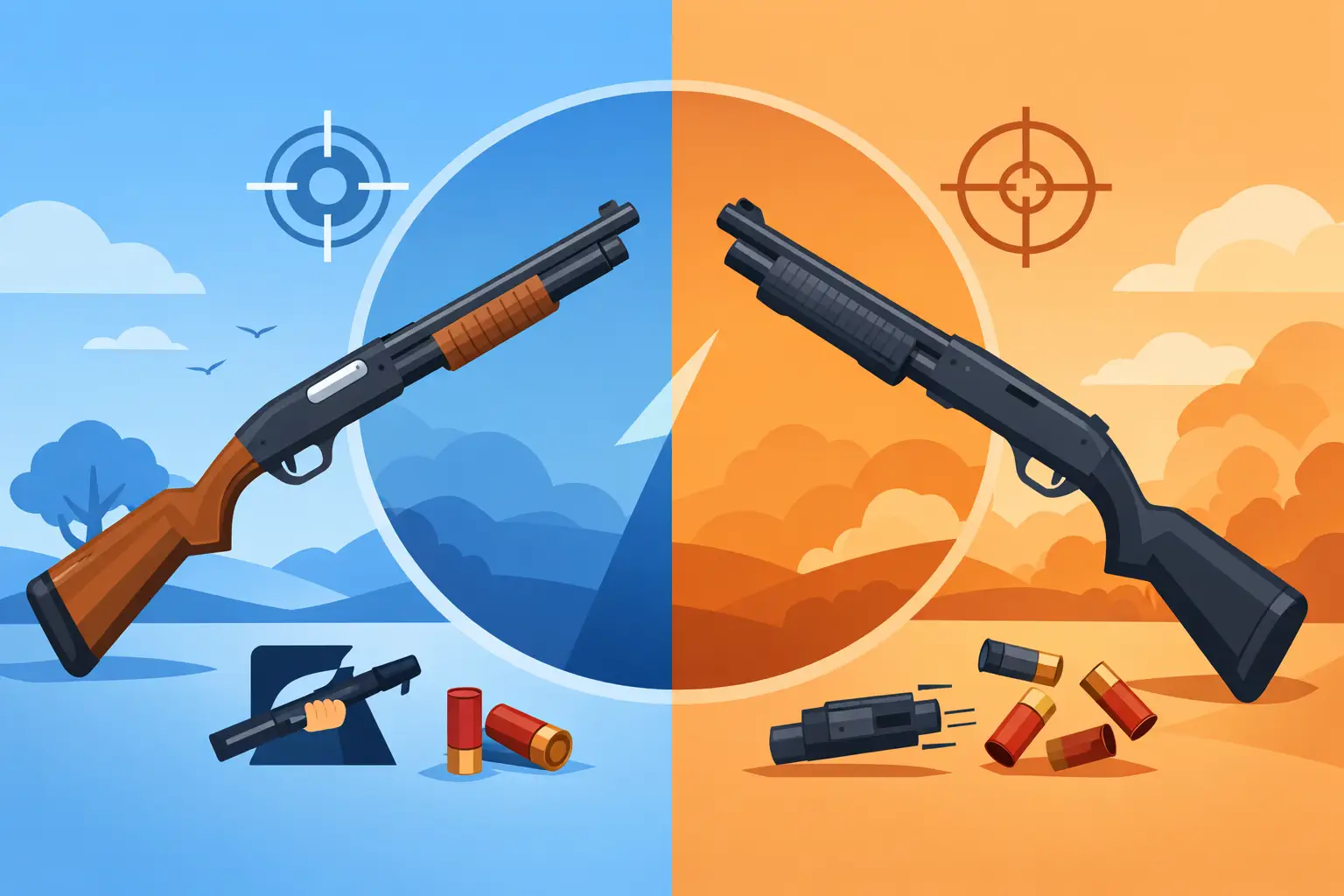
A shotgun purchase gets simple fast when you stop asking which action is universally better and start asking what you expect the gun to do. In the pump shotgun vs semi auto debate, the right answer depends on ammunition, budget, recoil tolerance, maintenance habits, and how the firearm feels in your hands. Both systems have earned a permanent place in American gun safes, hunting camps, and range bags.
A pump-action shotgun delivers mechanical simplicity and broad load flexibility. A semi-auto shotgun offers faster follow-up shots and often softer felt recoil. Neither advantage is imaginary, but neither tells the whole story. The model, fit, barrel length, gauge, magazine capacity, and intended use matter just as much as the action type.
Pump Shotgun vs Semi Auto: The Core Difference
A pump shotgun requires the shooter to cycle the fore-end after each shot to eject the fired shell and chamber the next round. That movement is part of the operating cycle. With a semi-auto shotgun, the firearm uses energy from the fired shell, commonly through a gas or inertia system, to cycle the next round automatically.
That difference affects nearly every buying decision. Pump guns are generally less expensive, mechanically straightforward, and known for handling a broad range of shell types when operated correctly. Semi-autos reduce the amount of manual work between shots, but they introduce more moving parts and can be more selective about ammunition, especially at the low end of the power range.
The action alone does not make a shotgun dependable or unreliable. Quality manufacturing, proper fit, correct ammunition, reasonable cleaning, and routine inspection all matter. A well-made firearm that matches your use is a better purchase than a bargain-priced model chosen only because of its action type.
Why Buyers Choose a Pump-Action Shotgun
Pump shotguns remain popular because they are hard-working, versatile firearms with a long track record. For the buyer who wants one shotgun for range use, hunting, property defense, or general utility, a pump can make a strong case.
The biggest advantage is load flexibility. Many pump actions can run light target loads, standard field loads, and heavier shells without depending on the energy level needed to operate a semi-auto system. That can be useful for shooters who want flexibility at the sporting-clays range or hunters who change loads by season and game.
Price is another major factor. Pump-action models usually offer a lower entry price than comparable semi-autos. That leaves more room in the budget for a quality case, hearing and eye protection, ammunition, a sling where appropriate, and professional instruction. For a first-time shotgun buyer, that total package can matter more than spending every dollar on the firearm itself.
There is a trade-off. The shooter must operate the action fully and consistently. Short-stroking the pump can create a stoppage, especially for someone new to the platform. A pump shotgun is simple, but simple does not mean effortless. Time behind the gun and safe range practice are still essential.
Why Buyers Choose a Semi-Auto Shotgun
A semi-auto shotgun is built for buyers who value reduced felt recoil and quicker follow-up shots. The action cycles after firing, so the shooter can maintain a more consistent shooting position rather than manually working a fore-end between rounds.
That recoil advantage can be meaningful. Gas-operated models, in particular, often spread recoil impulse over a longer period than a comparable pump gun. For extended range sessions, waterfowl hunts, upland bird hunting, or competition use, that can make a noticeable difference in comfort and fatigue.
Semi-autos are also attractive for shooters who want a smoother shooting experience. Many quality models balance well, mount quickly, and offer fast cycling with suitable ammunition. This does not remove the need for safe handling or good fundamentals, but it can make the platform more comfortable for a shooter who is sensitive to recoil.
The trade-off is cost and upkeep. Semi-auto shotguns typically cost more up front, and their operating systems require more attention. Gas systems can collect carbon and residue. Inertia systems may be cleaner-running, but they can be more sensitive to how the gun is held and to very light target loads. Every model has its own preferences, which is why reading the manufacturer’s ammunition guidance is worth the time.
Reliability, Recoil, and Maintenance
Reliability is usually the first point raised in any pump shotgun vs semi auto comparison. Pump guns have fewer action components and do not need the fired shell to cycle the mechanism. That gives them a practical edge when using varied shell lengths and power levels. Still, the shooter is part of the operating system. An incomplete pump stroke can stop the gun from cycling correctly.
Semi-autos place the cycling process in the firearm, which can improve speed and reduce shooter workload. A quality semi-auto, properly maintained and fed appropriate ammunition, can be highly reliable. Problems are more likely when a gun is neglected, improperly assembled, loaded with shells outside its preferred range, or used before its recommended break-in period is complete.
Recoil favors the semi-auto in most comparable setups. A heavier pump may soften recoil somewhat, but it generally transfers more of the firing impulse directly to the shooter. If the shotgun will see high-volume target shooting, recoil-sensitive users, or long days in the field, a semi-auto deserves serious consideration.
Maintenance favors the pump. Basic cleaning and inspection remain necessary for every firearm, but pump guns generally have fewer parts affected by combustion residue. Semi-autos are not difficult to maintain, but they demand a more consistent routine. Buyers who know they prefer minimal cleaning after every outing may be better served by a pump action.
Match the Shotgun to the Job
For a budget-conscious first shotgun, a pump action is often the strongest starting point. It delivers straightforward operation, broad ammunition compatibility, and a lower cost of entry. It is also a practical option for owners who want a durable utility shotgun without paying for a more complex action.
For hunting, the decision is more specific. A semi-auto can be excellent for waterfowl or upland use where recoil reduction and quick cycling are valued. A pump remains a proven choice for hunters who want dependable function across different loads and weather conditions. The best fit comes down to the game pursued, how much walking is involved, and whether the shooter values lighter recoil over lower initial cost.
For clay sports and frequent range use, semi-autos often earn the advantage because they are easier on the shoulder over long sessions. That said, plenty of shooters build strong fundamentals with pump guns and enjoy them for informal target shooting. Fit matters here more than marketing. A shotgun that mounts naturally and places the stock correctly against the shooter will be easier to shoot well than a more expensive model that does not fit.
For lawful home-defense ownership, prioritize a reputable model, manageable recoil, secure storage, local legal compliance, and professional training. The action type is only one part of the decision. A buyer should be able to safely handle, store, and maintain the firearm they choose.
What to Check Before You Buy
Do not buy based on action type alone. Check the gauge, chamber length, barrel configuration, overall weight, stock dimensions, sighting setup, and controls. A 12-gauge remains the most common choice because ammunition is widely available, while 20-gauge can be a smart option for buyers seeking lower recoil and a lighter package.
Handle the shotgun if possible before committing. Work the controls with the firearm unloaded and pointed in a safe direction. Pay attention to length of pull, reach to the safety, balance at the front of the gun, and whether the fore-end or charging handle feels natural. These details show up every time you shoot.
Also consider ownership costs beyond the purchase price. Semi-auto buyers should budget for regular cleaning supplies and test the ammunition they plan to use. Pump buyers should plan for practice that builds a complete, consistent action cycle. In either case, quality ammunition, safe storage, eye and ear protection, and instruction are part of buying responsibly.
The best shotgun is the one that fits your purpose, your budget, and your ability to maintain it. Compare proven models, buy from a trusted dealer, and give yourself enough range time to learn the firearm before relying on it for any serious role.