

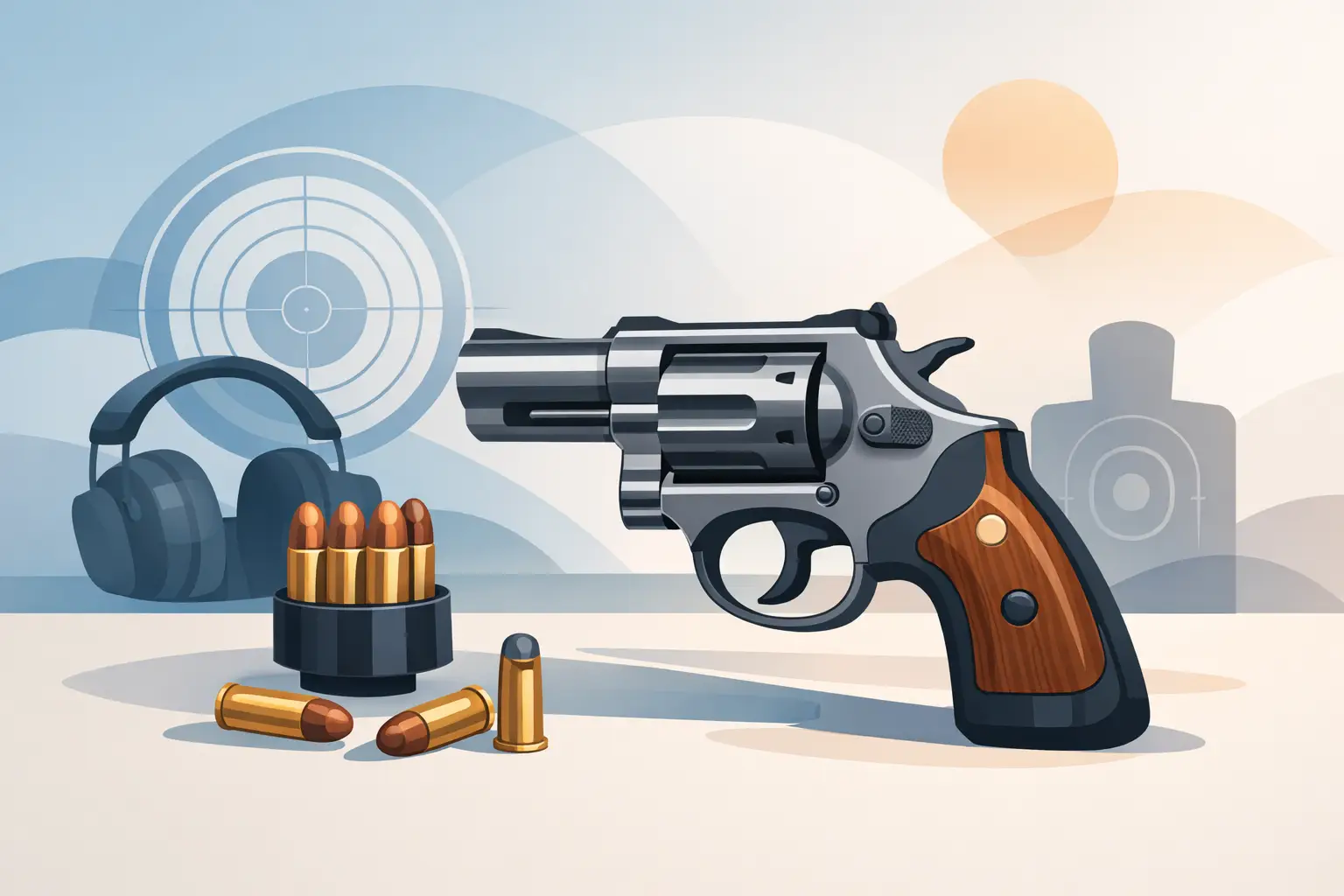
A first revolver can feel like an easy decision right up until you start comparing barrel lengths, calibers, frame sizes, and trigger pulls. That is where most new buyers get stuck. If you are trying to find the best revolver for beginners, the smart move is not chasing the flashiest model – it is choosing one you can shoot well, practice with often, and trust from day one.
Revolvers still earn their place because they are straightforward, durable, and easy to understand. Load the cylinder, close it, press the trigger. There is no magazine to seat, no slide to rack, and no guessing whether the gun is in battery. For many first-time handgun buyers, that simplicity is the whole appeal.
What makes the best revolver for beginners?
The right beginner revolver usually comes down to balance. You want enough weight to manage recoil, but not so much that carrying or handling the gun feels awkward. You want a caliber with real defensive credibility, but not one that punishes you every time you train. You also want a trigger that is usable in double action, because that is how most revolvers are shot in practical situations.
A lot of new buyers assume small revolvers are easier because they look less intimidating. In practice, the opposite is often true. Lightweight snub-nose revolvers are compact and convenient, but they kick harder, have shorter sights, and demand more control. A medium-frame revolver with a 3-inch or 4-inch barrel is usually a better starting point because it gives you a fuller grip, better sight radius, and more manageable recoil.
That is why the best revolver for beginners is rarely the smallest revolver in the case. It is the one that helps a new shooter build confidence fast.
Start with caliber, not brand
Brand matters, but caliber shapes the shooting experience more than anything else. For most beginners, the easiest place to start is with either .22 LR or .38 Special.
A .22 LR revolver is ideal for learning fundamentals. Recoil is light, ammo is affordable, and long practice sessions are realistic. If your goal is pure skill-building, this is hard to beat. The trade-off is obvious – .22 LR is not what most buyers want if the revolver will also serve a serious defensive role.
That brings most first-time buyers to .38 Special. It is the classic beginner-friendly revolver caliber because it offers controllable recoil, wide availability, and solid performance with quality loads. A .357 Magnum revolver can be an even smarter buy if it also chambers .38 Special. That gives you room to start with softer-shooting .38 loads and step up later if you want more power. It is a practical way to buy one revolver that does more than one job.
For most buyers, a .357 Magnum revolver fired with .38 Special ammo hits the sweet spot. You get flexibility without limiting yourself down the road.
Size matters more than most beginners expect
Frame size and barrel length change everything. Recoil, accuracy, concealment, and comfort all move with size.
Small-frame revolvers, especially 2-inch snub-nose guns, are popular for concealed carry. They are easy to carry and quick to store, but they are not always beginner-friendly on the range. Their short grips and light weight make them harder to control, especially under stress. If a new shooter starts with one of these, practice can become frustrating fast.
Medium-frame revolvers are often the smarter first purchase. A 3-inch barrel gives you a strong middle ground. It is easier to shoot than a snub nose, still compact enough for many defensive roles, and generally better balanced in the hand. A 4-inch barrel leans even more toward range use and home defense, with better sight radius and softer recoil.
If this is your first handgun and you are not locked into deep concealment, a 3-inch or 4-inch revolver makes more sense than an ultra-compact model. It is easier to learn on, easier to shoot accurately, and more forgiving of beginner mistakes.
Features worth paying for
Not every revolver upgrade matters. Some do.
Good sights are worth your money. Fixed sights are common on carry revolvers and they work, but a clean, highly visible front sight is a real advantage for new shooters. If the revolver has adjustable sights and your main use is target shooting or home defense, that can be a strong plus.
Grip shape also matters. Factory grips vary a lot. Some are compact for concealment, others are fuller and better for recoil control. A beginner usually benefits from a grip that fills the hand and gives solid purchase through the trigger pull.
Trigger quality is another big one. Revolvers are often fired double action, and a heavy, rough trigger can slow learning. You do not need a competition trigger, but you do want one that is smooth and predictable. A clean trigger helps a new shooter shoot better sooner.
Capacity gets attention, but for most first-time revolver buyers, five or six rounds is not the deciding factor. Shootability is. A six-shot medium-frame revolver in .38 Special or .357 Magnum often makes more sense for a beginner than a tiny five-shot revolver that is harder to control.
The best types of revolvers for first-time buyers
If you want the safest bet, look at a medium-frame double-action revolver chambered in .357 Magnum so you can train with .38 Special. That setup covers a lot of ground. It is practical for home defense, enjoyable enough for regular range use, and flexible enough to grow with you.
A .22 LR double-action revolver is another strong option if low-cost training is the top priority. This works especially well for buyers who are brand new to handguns or who want a dedicated practice revolver before moving into a centerfire gun.
A small-frame snub-nose revolver can still be the right answer if concealed carry is the main job and you are committed to practicing with it. Just be honest about the trade-off. These guns are easier to carry than they are to shoot well. That does not make them bad. It makes them specialized.
Single-action revolvers are usually not the best place to start unless you are buying for cowboy action shooting, collecting, or pure recreational use. They are enjoyable and iconic, but for defensive use and general first-gun practicality, a double-action revolver is the stronger choice.
Common beginner mistakes to avoid
The biggest mistake is buying too small. Many new gun owners think smaller means simpler, then end up with a revolver that has sharp recoil, limited grip area, and tougher accuracy demands.
The second mistake is buying too much caliber too soon. Full-house .357 Magnum loads in a lightweight revolver can turn a first range trip into a lesson in regret. There is nothing wrong with power, but power only helps if you can control it.
Another mistake is ignoring how the trigger feels. Dry fire matters here. If the trigger is excessively heavy or stacks badly through the pull, a beginner will notice it on every shot. That frustration adds up.
Some buyers also focus too heavily on looks or brand loyalty. A revolver with the right fit, weight, and chambering will serve you better than one you picked because it looked good in photos.
How to choose with confidence
Think about your real use case first. If this revolver will stay at home, lean toward a 4-inch model with enough weight to stay comfortable in long practice sessions. If it needs to split time between home defense and occasional carry, a 3-inch revolver is often the smart compromise. If it is primarily for carry, a smaller frame may be justified, but you should expect a steeper learning curve.
Then think about ammo cost and practice volume. A revolver you enjoy shooting is a revolver you will train with. That matters more than spec-sheet bragging rights. Most beginners are better served by controllable recoil and frequent range time than by buying the hottest chambering available.
Finally, buy from a retailer that actually understands product fit, inventory depth, and the difference between what sells fast and what suits a first-time owner. A high-volume dealer like Gun Shop Range is built for that kind of buyer – someone who wants real selection, recognizable brands, and a straight path to the right firearm without wasting time.
A smart first revolver is one you will actually shoot
There is no single answer for every buyer, and that is the point. The best revolver for beginners is usually a medium-frame double-action model in .357 Magnum that can fire .38 Special, with a 3-inch or 4-inch barrel and grips you can hold securely. That setup checks the right boxes without boxing you in later.
Buy for control first, not bragging rights. The revolver that feels steady in your hand, lets you train without punishment, and makes you want another range session next week is probably the right one.